
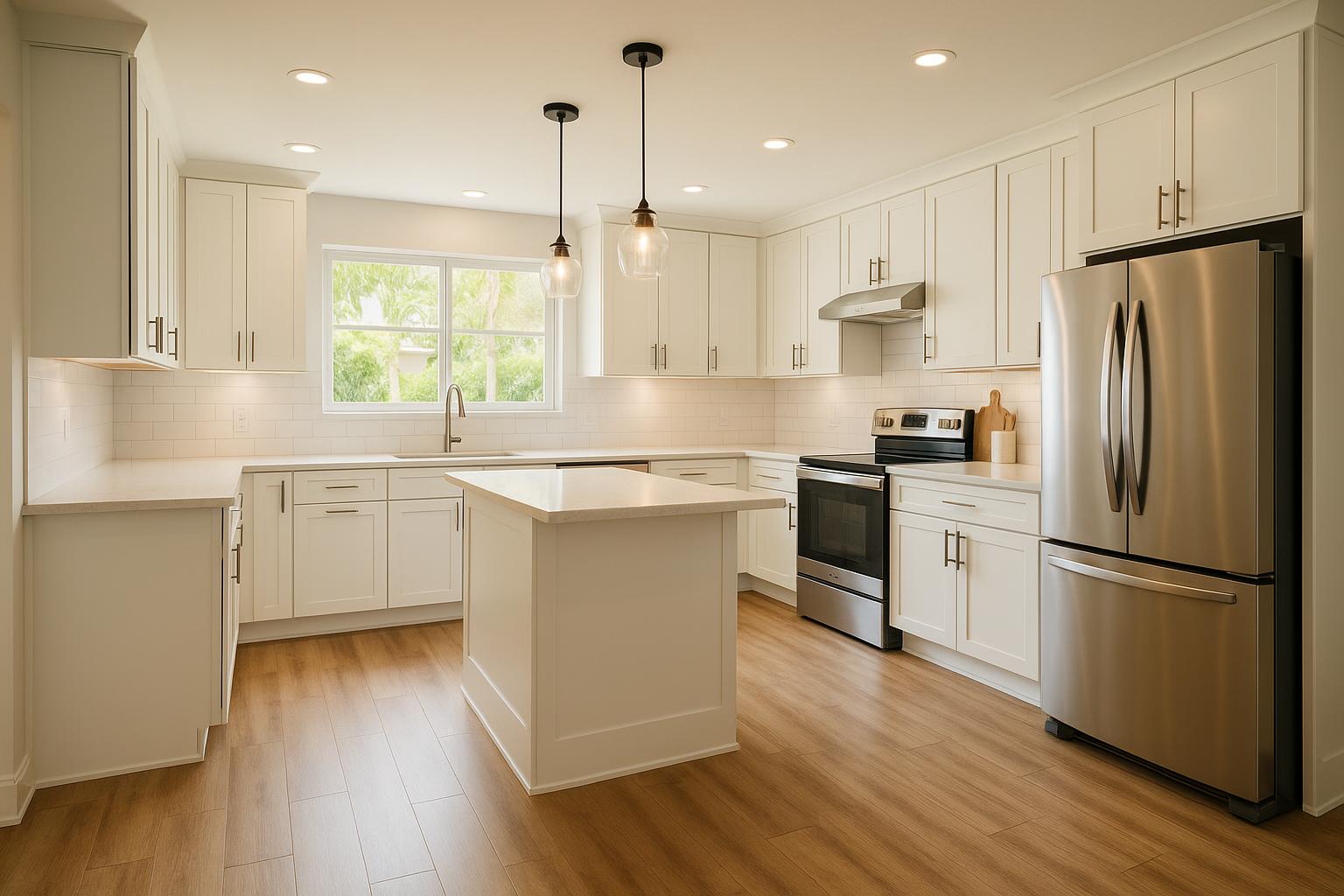
Is Your Kitchen Trying to Tell You Something?
Your kitchen is the heart of your home. It's where you cook family dinners, help kids with homework, host friends on the weekends, and grab that first cup of coffee every morning. But if you've been living with the same kitchen for ten, fifteen, or twenty years, there's a good chance it's quietly falling behind — in function, efficiency, and style.
Many homeowners in Lauderhill live in homes built in the 1980s and 1990s, and while those homes were well-constructed, kitchens from that era weren't designed for the way we live today. The good news? You don't always need a full gut renovation. Sometimes targeted upgrades make all the difference.
Here are the most common signs your kitchen is outdated and what you can realistically do about each one.
1. Your Cabinets Are Worn, Warped, or Just Plain Ugly
Cabinets are the most visually dominant feature in any kitchen. If yours are peeling, sagging, discolored, or stuck in a dated honey-oak finish, they're dragging down the entire room. Beyond aesthetics, older cabinets often lack the smart storage features — like pull-out shelves, soft-close hinges, and built-in organizers — that modern cabinetry offers.
What to do: If the cabinet boxes are still structurally sound, refacing or repainting them can save you thousands. But if they're warped, water-damaged, or poorly laid out, investing in custom cabinetry designed for your specific kitchen will transform both the look and functionality of the space. At EcoCraft Home Renovation, we build custom cabinets using sustainable materials that are built to last decades, not just years.
2. Your Countertops Are Stained, Cracked, or High-Maintenance
Laminate countertops were the standard for decades, and while they served their purpose, they scratch easily, stain over time, and can start to delaminate around the edges. Tile countertops with grout lines are another common culprit — they trap bacteria and are notoriously difficult to keep clean.
What to do: Countertop replacement is one of the highest-impact upgrades you can make. Quartz, recycled glass, and sustainably sourced granite are all excellent options that combine durability with a modern look. A new countertop paired with an updated backsplash can make your kitchen look completely different in just a few days.
3. The Layout Doesn't Work for Your Life
Does your kitchen feel cramped even though it's not that small? Are you constantly bumping into someone while cooking? Is the refrigerator in an awkward spot? Many older Lauderhill kitchens were designed with closed-off, galley-style layouts that don't suit today's open-concept living preferences.
What to do: A layout change is a bigger project, but it's often the most worthwhile investment. Opening up a wall, adding an island, or simply reconfiguring the work triangle — the path between your sink, stove, and refrigerator — can dramatically improve how your kitchen functions. A professional remodeler can help you figure out what's possible within your home's structure and your budget.
4. Your Lighting Is Flat and Outdated
If your kitchen is lit by a single fluorescent fixture in the center of the ceiling, you're working in the dark — literally. Poor lighting makes cooking harder, makes the room feel smaller, and washes out the colors of everything in the space.
What to do: Layer your lighting. Combine recessed ceiling lights for general illumination, under-cabinet LED strips for task lighting, and a pendant or two over an island or breakfast bar for visual interest. Modern LED fixtures use a fraction of the energy of older bulbs, which aligns perfectly with an eco-conscious approach to remodeling.
5. Your Appliances Are Energy Hogs
That refrigerator from 2005 might still be running, but it's costing you more on your electric bill every month than a newer Energy Star model would. Older dishwashers use more water. Older ranges lack the precision and safety features of modern cooktops. In South Florida, where air conditioning already drives up utility bills, an inefficient kitchen adds insult to injury.
What to do: When you're already remodeling, it's the perfect time to upgrade appliances. Planning your cabinet and countertop dimensions around new appliances — rather than the other way around — gives you a cleaner, more integrated result.
6. There's Visible Water Damage or Mold
This one goes beyond aesthetics. If you notice soft spots in the flooring near the dishwasher, discoloration under the sink, bubbling in the ceiling, or a musty smell you can't track down, you may have water damage that's been building for years. In Lauderhill's humid subtropical climate, moisture problems can escalate quickly if left unaddressed.
What to do: Don't cover it up with a cosmetic fix. A proper kitchen remodel addresses what's behind the walls and under the floors. Any reputable remodeling contractor will inspect for water damage, mold, and structural issues before starting finish work. Ignoring these problems now only makes them more expensive later.
7. Your Kitchen Doesn't Match the Rest of Your Home
Maybe you've already updated your living room, bathrooms, or flooring throughout the house. If your kitchen still looks like it belongs in a different decade, it creates a jarring disconnect. It also affects your home's resale value — kitchens are consistently the number one room buyers evaluate when considering a purchase.
What to do: Even if you're not planning to sell anytime soon, bringing your kitchen in line with the rest of your home's style creates a more cohesive, enjoyable living experience. Coordinating your kitchen's flooring, paint colors, and finishes with adjacent rooms ties everything together.
Where to Start If You're Ready for a Change
If you recognized your kitchen in three or more of the signs above, it's probably time to start planning. Here's a simple approach:
- Set a realistic budget. Know what you can comfortably spend before you start dreaming. A good contractor will help you prioritize upgrades that deliver the most value within your budget.
- Identify your biggest pain points. Is it the layout? The look? The functionality? Starting with what bothers you most ensures the remodel actually improves your daily life.
- Talk to a local professional. Online inspiration is great, but every home is different. A remodeling company that knows Lauderhill homes — the common floor plans, the building codes, the climate considerations — can give you advice that's specific to your situation.
At EcoCraft Home Renovation, we help homeowners across Lauderhill, Plantation, Sunrise, and the surrounding Broward County communities turn outdated kitchens into spaces they genuinely love spending time in. We combine honest craftsmanship with eco-friendly materials and smart design, and we'll never push you toward a project that doesn't make sense for your home or your budget.
If your kitchen has been nagging at you, trust your instincts. Sometimes the best home improvement decision is simply deciding to stop putting it off.