
Yes, You Can Remodel Without Moving Out
One of the biggest concerns we hear from homeowners in Lauderhill is a simple but stressful one: How do I survive a remodel while I'm still living in the house? It's a valid worry. The thought of dust in your morning coffee, blocked hallways, and a kitchen that's out of commission for weeks can make even the most excited homeowner hesitate.
The good news? With smart planning, clear communication with your contractor, and a few practical strategies, you can get through a renovation with your daily routine mostly intact. At EcoCraft Home Renovation, we help families across Lauderhill, Plantation, and Sunrise navigate this exact challenge every week. Here's what we've learned works best.
Start With a Realistic Timeline
Before a single cabinet is removed or a tile is pulled up, you need a clear understanding of how long the project will take. A bathroom remodel might last two to three weeks. A full kitchen renovation could stretch to six or eight weeks, depending on the scope. Custom cabinetry and countertop replacement add additional lead times for materials.
Ask your contractor for a detailed project schedule broken into phases. Knowing that demolition happens in week one, plumbing rough-in happens in week two, and finishing work wraps up in week five gives you something concrete to plan around. It also helps you set expectations with your family so nobody is caught off guard when the water gets shut off for a day.
Set Up a Temporary Living Station
If your kitchen is being remodeled, you'll need an alternative place to prepare meals. This doesn't have to be elaborate. Here's what most of our Lauderhill clients do:
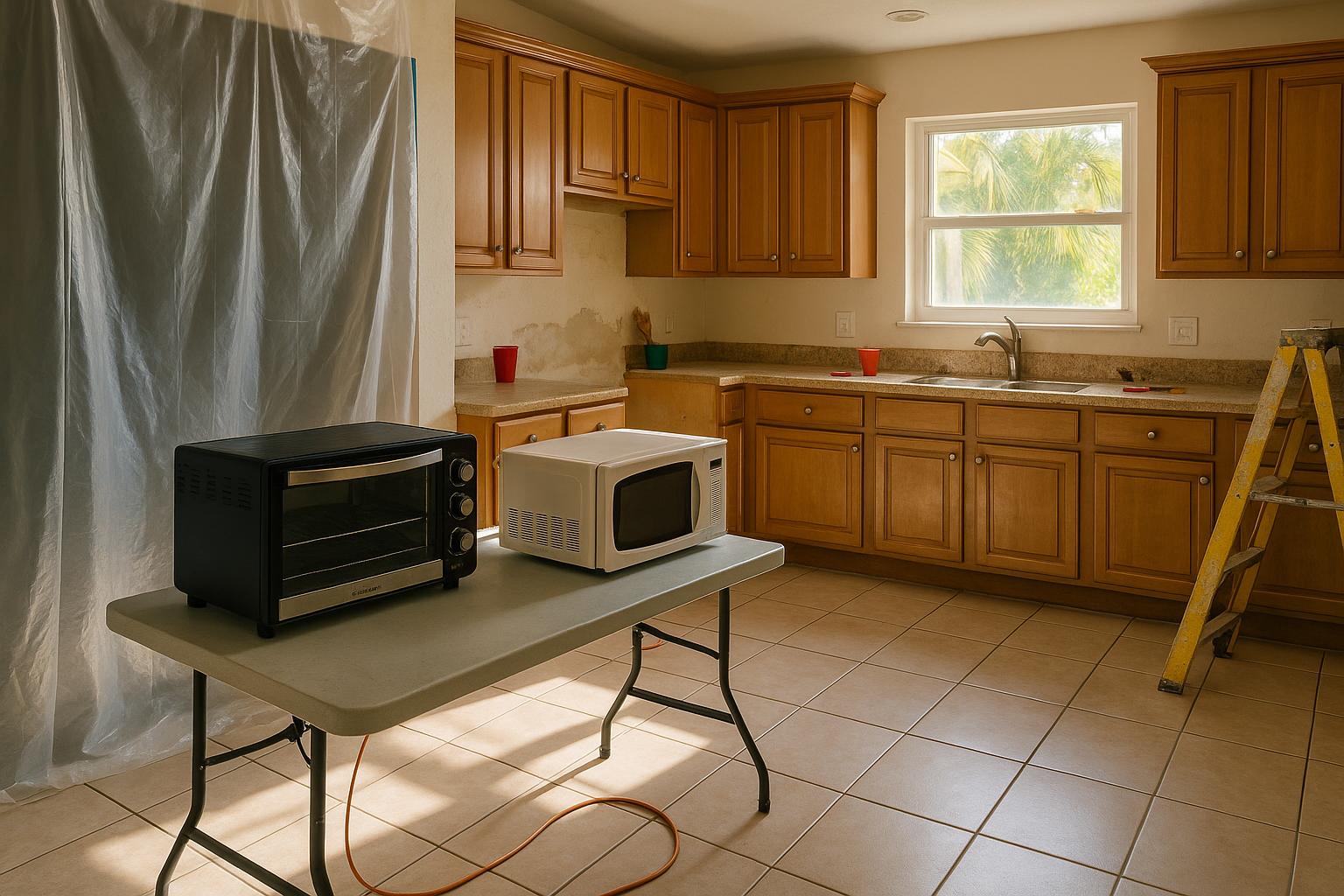
- Create a mini kitchen in another room with a microwave, electric kettle, toaster oven, and a small folding table. A cooler with ice can stand in for your refrigerator if it needs to be disconnected.
- Stock up on easy meals before the project starts — canned goods, paper plates, disposable utensils, and grab-and-go snacks reduce the daily friction.
- Budget for takeout a few nights a week. It's a small cost compared to the value of a brand-new kitchen, and it keeps stress levels manageable.
If a bathroom is the project, identify which other bathroom in the house will serve as the primary one. If you only have one bathroom, talk to your contractor about phasing the work so that the toilet and shower are functional for as much of the project as possible. This is something we prioritize at EcoCraft because we understand it's non-negotiable for most families.
Protect the Rest of Your Home From Dust and Debris
Renovation dust has a way of traveling into every corner of your house. South Florida's humidity can make it cling to surfaces even more stubbornly. Here are some protective steps that make a real difference:
- Plastic sheeting and zip walls should be set up between the work zone and your living areas. A good contractor will handle this as part of their standard process.
- Seal HVAC vents in the construction area to prevent dust from circulating through your air conditioning system. This is especially important in Lauderhill where AC runs nearly year-round.
- Run an air purifier in adjacent rooms to catch fine particles that sneak past barriers.
- Lay down floor protection along walkways between the work zone and your front door so that foot traffic doesn't grind debris into your existing flooring.
At EcoCraft, dust containment and daily cleanup are built into every project. We believe that respecting your living space is just as important as the quality of the finished product.
Communicate With Your Contractor — A Lot
The number one thing that reduces stress during a live-in remodel is communication. Before the project begins, establish the basics:
- What time will the crew arrive and leave each day?
- Which doors will they use for entry?
- Where will materials and tools be stored?
- How will you be notified about water or power shutoffs?
- Who is your single point of contact for questions or concerns?
A quick five-minute check-in at the start or end of each workday can prevent misunderstandings and keep the project moving smoothly. Don't be afraid to speak up if something isn't working for your family. A professional remodeling team expects these conversations and welcomes them.
Keep Kids and Pets Safe
Active construction zones are genuinely dangerous for curious children and pets. Sharp materials, power tools, exposed wiring, and open subfloors all present hazards. Establish a firm boundary that kids and animals do not enter the work area, even when the crew has gone home for the day.
Consider setting up a dedicated play area or pet zone on the opposite side of the house. If you have a screened patio or lanai — common in many Lauderhill homes — that can be a great retreat space during noisy phases like demolition or tile cutting.
Plan Around the Messy Phases
Not every phase of a remodel is equally disruptive. Demolition and flooring installation tend to be the loudest and dustiest. Interior painting and finishing work, on the other hand, is relatively quiet but may produce fumes that require ventilation.
If you have flexibility in your schedule, plan to be out of the house during the most intense days. Visit a friend, work from a coffee shop, or take the kids to one of the parks in Lauderhill. Even a few hours away during peak disruption can make the whole experience feel more manageable.
A Quick Checklist Before Your Remodel Starts
- Get a written project timeline with milestones from your contractor.
- Set up a temporary kitchen or bathroom station.
- Clear personal items and valuables from the work zone.
- Confirm dust containment and cleanup procedures with your crew.
- Establish daily communication expectations.
- Create a safe zone for children and pets.
- Identify two or three days you can plan to be away from home during heavy work.
- Stock up on essentials — meals, paper goods, patience.
The Payoff Is Worth the Temporary Inconvenience
Living through a remodel isn't always comfortable, but it's absolutely doable — and it saves you the cost and hassle of temporary housing. Most of our clients in Lauderhill and the surrounding communities tell us that within a day or two of the project starting, they settled into a rhythm and the disruption felt much smaller than they had feared.
The key is preparation. When you know what to expect, have a plan for daily life, and work with a contractor who respects your home and your time, the process becomes something you can manage with confidence.
If you're considering a kitchen remodel, bathroom renovation, or any other home improvement project in Lauderhill, Plantation, Fort Lauderdale, or the surrounding areas, EcoCraft Home Renovation is here to guide you through every step — including the part where you're still living in the middle of it. Reach out to us for a consultation, and let's build a plan that works for your home and your life.