
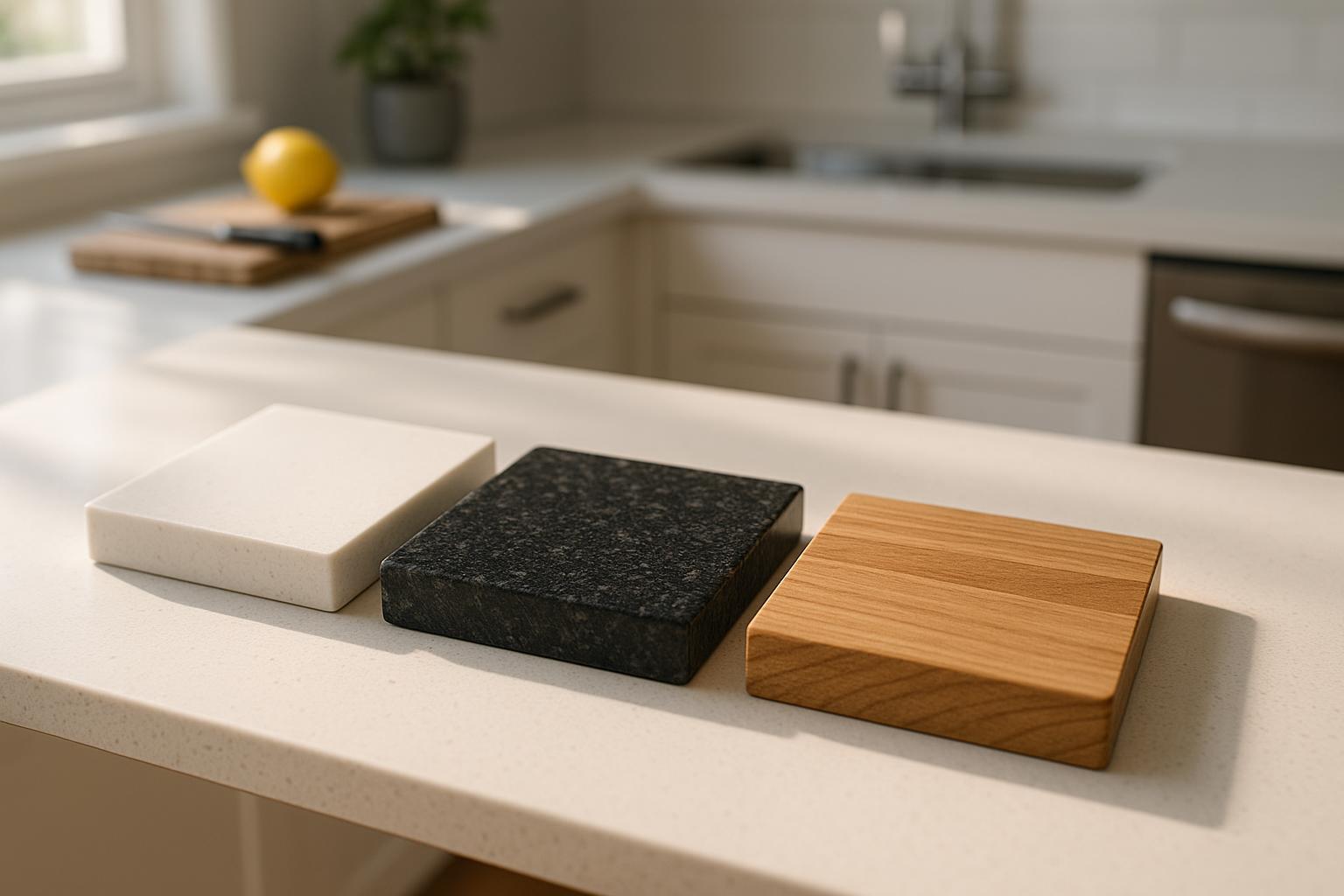
Choosing a Countertop Shouldn't Feel This Complicated
You've decided to remodel your kitchen — congratulations. But now you're standing in a showroom surrounded by slabs of granite, quartz, marble, butcher block, and something called sintered stone, and suddenly you're not sure about anything anymore.
You're not alone. Countertop selection is one of the most common sticking points we see with homeowners in Lauderhill and across Broward County. It's a big decision because your countertops affect how your kitchen looks, how it functions, and how much value your remodel adds to your home.
The good news? Once you understand a few key factors — durability, maintenance, cost, and how you actually use your kitchen — the right choice becomes much clearer. Let's walk through it.
Start With How You Use Your Kitchen
Before you fall in love with a material based on looks alone, take an honest look at your daily kitchen habits. This matters more than most people realize.
- Do you cook frequently? If you're prepping meals every day, you need a surface that resists scratches, heat, and stains.
- Do you have young kids? Spills, juice boxes, and art projects mean you want something low-maintenance and forgiving.
- Do you entertain often? If your kitchen doubles as a gathering space, aesthetics and durability both carry weight.
- Is this your forever home or a future sale? If resale is on the horizon, certain materials offer better return on investment than others.
Your answers to these questions will immediately narrow the field and save you from buyer's remorse down the road.
Breaking Down the Most Popular Countertop Materials
Quartz
Quartz is engineered stone, which means it's manufactured from natural quartz crystals combined with resins and pigments. It's one of the most popular countertop choices for good reason.
- Pros: Extremely durable, non-porous (no sealing required), consistent color and pattern, wide range of styles including options that mimic marble and concrete.
- Cons: Can be damaged by excessive heat, higher price point than laminate, not ideal for outdoor kitchens.
- Best for: Busy families, homeowners who want a low-maintenance surface that looks polished for years.
Here in South Florida, quartz is especially practical because it handles humidity well and doesn't require the periodic resealing that natural stone demands.
Granite
Granite has been a kitchen staple for decades, and it still holds up as a solid choice — literally and figuratively.
- Pros: Naturally beautiful with unique veining, heat-resistant, very hard and scratch-resistant, adds strong resale value.
- Cons: Requires sealing once or twice a year, can chip at the edges, porous if not properly maintained.
- Best for: Homeowners who love natural stone and don't mind a small amount of upkeep.
Marble
Marble is the showstopper. There's nothing quite like its veining and depth, but it comes with trade-offs.
- Pros: Stunning visual appeal, cool surface temperature (great for baking), timeless elegance.
- Cons: Soft and porous — stains, scratches, and etches easily. Requires regular sealing and careful use.
- Best for: Low-traffic kitchens, homeowners who prioritize aesthetics and are committed to maintenance, or as an accent on a kitchen island.
Butcher Block
Butcher block brings warmth and texture that stone simply can't replicate. It's a favorite for homeowners going for a farmhouse or transitional look.
- Pros: Warm, natural appearance. Can be sanded and refinished. Eco-friendly when sourced from sustainable wood.
- Cons: Susceptible to water damage, scratches, and bacteria if not oiled regularly. Not ideal near sinks without proper sealing.
- Best for: Secondary prep areas, kitchen islands, or homeowners who embrace a lived-in aesthetic.
Laminate
Don't write off laminate. Modern laminate countertops have come a long way from the thin, peeling surfaces of the 1990s.
- Pros: Budget-friendly, available in hundreds of colors and patterns, easy to clean, lightweight.
- Cons: Less durable than stone, can be damaged by heat and sharp objects, lower resale value.
- Best for: Budget-conscious remodels, rental properties, or homeowners who want a fresh look without a major investment.
What About Sustainability?
At EcoCraft Home Renovation, we're always thinking about the environmental impact of the materials we recommend. If sustainability matters to you — and for many Lauderhill homeowners it does — here are a few things to consider:
- Recycled quartz options are available from several manufacturers and perform just as well as conventional quartz.
- Reclaimed wood butcher block gives new life to salvaged timber and adds character you can't buy off a shelf.
- Locally sourced stone reduces the carbon footprint associated with shipping heavy slabs across the country or overseas.
We're happy to walk you through eco-friendly countertop options that align with your values without compromising on quality or style.
How Much Should You Budget?
Countertop costs vary widely depending on material, square footage, edge profiles, and installation complexity. Here's a general range to help you plan:
- Laminate: $10–$40 per square foot installed
- Butcher block: $40–$100 per square foot installed
- Granite: $50–$150 per square foot installed
- Quartz: $55–$175 per square foot installed
- Marble: $75–$250 per square foot installed
Keep in mind that these numbers can shift based on the specific product line and the layout of your kitchen. A countertop with multiple cutouts for sinks and cooktops will cost more to fabricate and install than a simple rectangular island top.
Three Mistakes to Avoid When Choosing Countertops
1. Choosing Based on Looks Alone
A gorgeous Calacatta marble slab might steal your heart, but if you have three kids and cook every night, it's going to break it just as fast. Match the material to your life, not just your Pinterest board.
2. Ignoring the Rest of Your Kitchen Design
Your countertop doesn't exist in isolation. It needs to work with your cabinetry, backsplash, flooring, and lighting. Bring samples home and see how they look in your actual kitchen — not under showroom lights.
3. Skipping Professional Measurement and Installation
Countertop installation is not a DIY project. Even a small error in measurement can mean an ill-fitting slab, visible seams, or problems around sinks and appliances. Professional templating and installation protect your investment.
Let's Find the Right Fit for Your Kitchen
Choosing a countertop is a big decision, but it doesn't have to be a stressful one. When you work with a remodeling team that understands materials, design, and how South Florida homes actually function, the process becomes straightforward and even enjoyable.
If you're planning a kitchen remodel in Lauderhill, Plantation, Sunrise, or anywhere in the Broward County area, EcoCraft Home Renovation is here to help you sort through the options and find a countertop that fits your style, your budget, and the way you live. Reach out to us for a free consultation — we'd love to talk through your project.